Beat Maker Pro - Drum Pad
- 3.9
- Rating
- 5.00M
- Installs
- Free
- Price
 Analysis by App-foxy
I spent time with Beat Maker Pro - Drum Pad as a casual music and audio app, and my first impression was straightforward: it wants to turn a phone into a small practice space for rhythm, guitar, and piano. That makes it more approachable than a full digital audio workstation, especially if you want to tap out an idea without learning a complicated production interface first.
The app is free, aimed at Everyone, and developed by Momcenter. It has reached over a million installs and holds a 4.7 average from around four thousand six hundred ratings, which suggests that its simple approach has found an audience. I would not treat those figures as proof that it replaces professional music software, but they do fit my experience of an app designed for quick experimentation rather than deep studio work.
What matters most here is how the app behaves in ordinary mobile situations. A beat-maker is often opened for a few minutes: while waiting, during a break, or when a melody suddenly comes to mind. In those moments, low friction is more valuable than an enormous feature list. At the same time, the experience is closely tied to the phone itself, its sound output, and the connectivity around it, so it is worth knowing where this kind of tool fits before making it part of a serious workflow.
You May Also Like

 Google Keep - Notes and lists
Google Keep’s Quiet Growth Shows the Appeal of Simpler Notes
As mobile work gets busier, Google Keep keeps winning a simple contest: capture a thought quickly, find it later, and get on with the day.

 Blood Strike: 2.5 Anniversary
Blood Strike’s Loadouts Turn Every Drop Into a Tactical Gamble
A close look at Blood Strike’s custom loadouts: how fast access to signature weapons reshapes its battle royale rhythm, rewards preparation, and narrows the gap between fights.

 Pandora - Music & Podcasts
Pandora’s Music Is Easy to Start, but Harder to Recover
Pandora’s strength is its low-effort path from a seed to a station. Its weak spot is how much confidence it asks you to place in connection, setup, and quiet recovery.

 8 Ball Pool
 Is Built on Rivalries, Rematches, and Routine
A close look at the rivalries, rematches, shared routines, and unanswered safety questions that turn a quick pool match into a persistent mobile community.

 Samsung Music
’s Quiet Strength Is Playing What You Already Own
Its reach comes less from spectacle than from dependable access to a personal library. That simplicity is both the app’s strongest retention engine and its ceiling.

 AccuWeather: Weather Radar
AccuWeather Review: A Quick, Clear Forecast for Everyday Decisions
For everyday plans, the best forecast is the one you can understand quickly. AccuWeather makes rain timing, radar, and local conditions easy to act on, with a few trade-offs.
More From Our News Desk



How Beat Maker Pro fits into everyday music making
I find Beat Maker Pro most useful when I treat it as the first stop for an idea, not the place where every part of a song has to be finished. A short session can help me decide whether a rhythm or melodic response is worth developing, while a simple note of the pattern makes that idea easier to carry into another tool. That handoff is where the app’s quick, approachable style matters most.
A welcoming starting point for rhythm, guitar, and piano
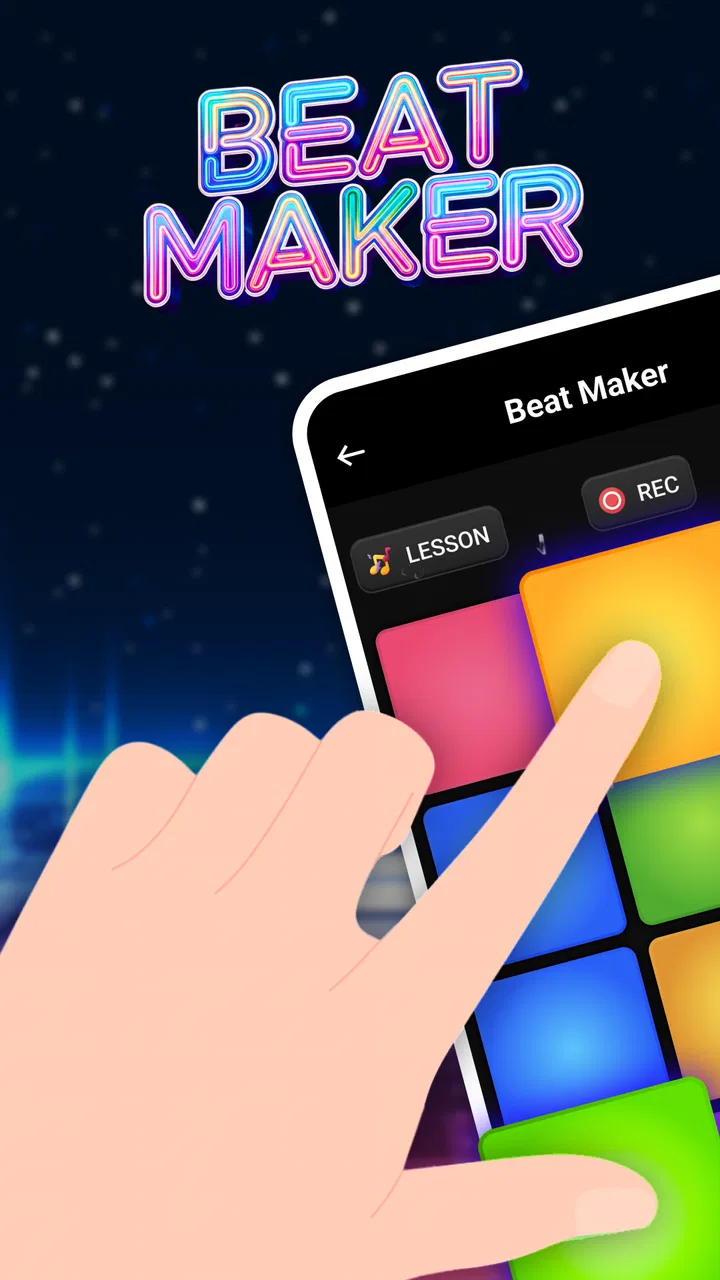
The central appeal is the combination of drum-pad beat making with playable drum, guitar, and piano elements. I found that combination useful because it encourages a beginner to think beyond a single loop. You can begin with a basic rhythm, then use the other instruments to explore a bass-like idea, a chord shape, or a simple melodic response. Even without formal music training, that progression feels more natural than opening a complex sequencer filled with tracks and technical controls.
There is also a psychological advantage to a touch interface. Tapping a pad gives immediate physical feedback, while pressing piano or guitar controls invites a different kind of experimentation. I would recommend it to someone who wants to understand how rhythm and melody interact, not just someone searching for a button that automatically produces a finished song.
That simplicity has a boundary. If you already work with detailed arrangements, precise note editing, advanced mixing, or a large instrument library, this is unlikely to be your main production environment. A conventional digital audio workstation will normally offer more control over timing, effects, recording, and arrangement. Beat Maker Pro is better viewed as an accessible sketchbook and practice tool than as a complete replacement for studio software.
Why the phone format changes the way you use it
On a mobile screen, the best sessions are short and focused. I would use it to test whether a rhythm feels right, create a small idea before it disappears, or let a beginner experiment with different sounds without worrying about making a technically perfect recording. The format encourages play, which is valuable because many people abandon music apps when the first screen feels like a control panel from an aircraft.
A realistic example is a commute or a quiet moment before an appointment. I might open the app, build a simple drum pattern, try a piano phrase over it, and stop once I know whether the idea has potential. That is a good use of the app because the goal is discovery, not a polished release. It can also work for a parent introducing a child to basic rhythm, since the Everyone age classification makes it suitable for a broad audience, although supervision and sensible volume remain good habits with any audio app.
The same phone-first design can become limiting when your hands cover part of the interface or when you want to play several parts with more expressive control. Touch controls are convenient, but they do not feel identical to physical drum pads, piano keys, or a guitar. I would skip this app if your priority is realistic instrumental technique, detailed finger expression, or a setup built around external music hardware.
Connectivity and the moments that deserve attention
Connectivity shapes the experience even when the creative action itself feels immediate. Any mobile app can behave differently depending on whether the phone is online, whether a connection is stable, and whether the user is moving between networks. I avoid treating a music tool as automatically independent from the network, because the practical experience can involve startup behavior, updates, or other connected parts of the phone environment.
My advice is to test the specific workflow you care about before relying on it somewhere important. Open the app in the same kind of place where you expect to use it, try the instruments, and check whether your intended session begins smoothly. If you are preparing for a class, a trip, or a performance idea, do that test ahead of time rather than discovering a connection-related interruption at the last minute.
This is not a criticism unique to Momcenter’s app; it is a sensible habit for mobile audio software. The important distinction is between using it spontaneously and depending on it as the only tool in a time-sensitive situation. For casual beat creation, a brief connectivity interruption may be harmless. For a planned demonstration, it can break concentration and make the app feel less dependable than it did at home.
What happens when a session is interrupted
Failure and recovery matter more in music apps than many people expect. A rhythm can be lost in seconds if the app closes, the phone receives an interruption, or the user leaves the screen without knowing what will be retained. I therefore recommend treating early sessions as experiments until you understand how this particular version handles the workflow you use.
Start with a small pattern instead of spending a long time on an elaborate arrangement. After creating something you like, pause and check what the interface allows you to do next before moving on. This is a practical way to learn the app without investing a full evening in an idea that may be difficult to recover after an interruption.
If the app does not respond as expected, I would use a calm recovery routine: stop tapping repeatedly, return to the app normally, and rebuild the smallest useful part of the idea first. Keeping a quick note of the rhythm or chord sequence can also help. That may sound old-fashioned, but it prevents a phone-based sketch from becoming impossible to recreate. For important work, I would still move the idea into a more established recording or composition workflow rather than trusting one mobile session as the only copy.
Using it carefully when data matters
Music apps can encourage repeated opening, and repeated opening is exactly when data-conscious habits become useful. If you are on a limited mobile plan, avoid assuming that every app behaves the same way in every situation. Use the app first in a familiar environment, observe how it fits your normal phone use, and reserve longer creative sessions for a setting where your connection and data allowance are comfortable.
I also prefer downloading or updating apps before leaving home when I know I will be using them during travel. That does not mean I am claiming a particular offline mode here; it simply reduces the chance that an update or first-run requirement will compete with the creative moment. The current version is 1.0.3, so checking that the app is up to date before an important session is a sensible precaution rather than something to leave until the last minute.
There is another kind of data to protect: your musical ideas. A short phone sketch may feel disposable, but it can become the starting point for a song. I would write down the tempo impression, chord order, or a memorable rhythm when the idea matters. The app is excellent for catching inspiration, but a careful user should still build a personal backup habit instead of assuming that every creative experiment will remain available exactly as it was.
Who will enjoy it most
Beat Maker Pro makes the most sense for beginners, curious listeners, casual beat makers, and musicians who want a lightweight place to try an idea. It is also suitable for someone who finds conventional production software intimidating. The combination of drums, guitar, and piano gives a newcomer several musical directions to explore without forcing an immediate decision about becoming a specialist in one instrument.
I can also see value for experienced musicians during the earliest stage of writing. A phone is often closer than a computer, and a simple beat can reveal whether a chorus needs more movement or whether a melody has enough space. In that role, the app does not need to deliver a finished master. It only needs to help me decide whether an idea deserves more attention.
It is less suitable for producers who need detailed automation, extensive sound design, multitrack editing, or a dependable professional archive. I would also choose a dedicated instrument-learning app if my main goal were structured lessons, technique correction, or a carefully graded practice plan. This app’s strength is immediate interaction, not a complete curriculum.
Small techniques that improve the experience
I found that starting with a deliberately sparse rhythm works better than filling every available space. Leave room between hits, then add one element at a time. This makes it easier to hear whether the guitar or piano part contributes something useful, and it prevents the first attempt from turning into a crowded collection of taps.
Another useful approach is to switch roles during a session. Begin as a drummer, then listen for a simple response on piano, and finally test whether the guitar part changes the mood. This turns the app into a compact arrangement exercise. It also exposes a trade-off: the more parts I try to manage at once on a phone, the more important it becomes to keep the idea simple and remember what I intended.
I would also use headphones when I need to judge timing or texture carefully, while keeping the volume moderate. The phone speaker is convenient for sharing a quick idea with someone nearby, but it can hide details and make a rhythm seem more balanced than it really is. Headphones are not a substitute for proper monitoring, yet they make short evaluation sessions more consistent.
Finally, separate play from evaluation. Spend one session trying unusual combinations without judging them, then return later and decide which idea is worth keeping. This is particularly helpful with a beginner-friendly app because the low barrier encourages many experiments. The challenge is not producing sound; it is recognizing which sound has a direction.
Version, access, and practical expectations
The app was released on December 12, 2025, and the version I considered is 1.0.3. That makes it sensible to keep expectations realistic: early versions can improve over time, and small interface details may matter more to different users than the headline instrument selection. I would pay attention to how comfortably the controls fit my phone and whether the workflow matches my habits rather than judging it only by the number of instruments presented.
There is no purchase barrier because it is free, which makes trying it low risk. That is especially useful for a beginner who is unsure whether beat making will become a regular hobby. Still, “free” does not automatically mean “complete.” Someone comparing it with paid music software should focus on the actual workflow they need: quick tapping and exploration favor this app, while precision editing and long-term project management favor a dedicated workstation.
The broad age rating is another reason it can work as an introductory music toy, but adults should still guide younger users around volume, screen time, and expectations. A child may enjoy the instant response without understanding musical structure, while an older beginner may appreciate using the same tools to explore rhythm more deliberately.
My connectivity verdict
For me, the best way to use Beat Maker Pro is as a connected mobile sketchpad that I test in advance for the places where I plan to use it. It is not the app I would choose as the sole foundation for a serious production pipeline or a high-pressure performance. A desktop workstation, a full mobile studio, or physical instruments will be better when control, reliability, and archiving matter more than convenience.
That limitation does not weaken its main appeal. The app gets beginners quickly from “I want to make a beat” to actually tapping one out, and the addition of guitar and piano encourages broader musical thinking. Its strongest use case is the small idea that needs to be explored now, before a computer is available or before motivation fades.
My recommendation is simple: choose it if you want an approachable way to experiment with rhythm and basic instrumental ideas, and keep a more capable tool nearby when the sketch becomes a real project. Momcenter has made a free Music & Audio app that feels inviting for first steps, provided you understand the difference between instant creativity and complete music production. For a curious beginner or a musician who likes capturing rough ideas on a phone, that is a worthwhile balance.
FAQs for Beat Maker Pro - Drum Pad
01What features does Beat Maker Pro - Drum Pad offer?
Beat Maker Pro - Drum Pad provides an intuitive interface with a wide range of features including customizable drum pads, a variety of sound packs, and real-time recording capabilities. Users can also access tutorials to enhance their skills and share their creations directly from the app. It's suitable for both beginners and experienced musicians.
02Is Beat Maker Pro - Drum Pad suitable for beginners?
Yes, Beat Maker Pro - Drum Pad is designed to be user-friendly for beginners. It offers step-by-step tutorials and easy-to-navigate features, making it accessible for those new to music production. Additionally, the app provides pre-made sound packs and templates to help beginners start creating beats right away.
03Does Beat Maker Pro - Drum Pad require an internet connection?
While Beat Maker Pro - Drum Pad can be used offline, an internet connection is required to download new sound packs and access certain features such as online tutorials. However, once the necessary downloads are complete, users can create and record music without needing to stay connected to the internet.
04Are there any in-app purchases in Beat Maker Pro - Drum Pad?
Yes, Beat Maker Pro - Drum Pad offers in-app purchases. Users can buy additional sound packs, effects, and advanced features. While the app provides a substantial free version, these purchases can enhance the music-making experience by offering more variety and customization options.
05Is Beat Maker Pro - Drum Pad compatible with all devices?
Beat Maker Pro - Drum Pad is compatible with both Android and iOS devices, but it requires a minimum version of the operating system for optimal performance. Users should check the app store listing to ensure compatibility with their specific device model and OS version, as older devices might experience limitations.
Pros
- User-friendly interface for beginners.
- Wide variety of sound packs available.
- Real-time audio recording supported.
- Interactive tutorials enhance learning.
- Customizable drum pads for creativity.
Cons
- In-app purchases can be expensive.
- Limited features in free version.
- Ads may interrupt during use.
- Requires internet for most features.
- Battery consumption is relatively high.

Beat Maker Pro - Drum Pad
Gallery